Unemployed youth integrated through internships in Transylvanian farms
July 2020
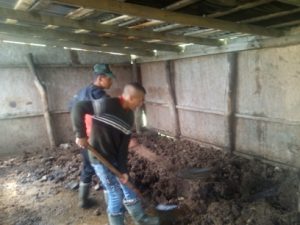
We are half way through the implementation of our project including of 5 unemployed youth (generically called as NEET) from Laslea in the local agricultural market. The youngsters are working with three farmers from Laslea. We are offering them better prospects of integration into the labour market and solving the local farmers’ lack of human resources in their activity.
If you are not familiar with this term, NEET stands for ‘Not in Employment, Education or Training’ and refers to young people between 16 and 24 years old who are neither studying nor working. Practically, they do not fit in the society.
This project showed us how vulnerable the NEET category is, especially young people from the countryside and who come from families that rely on social aid. It is very difficult, if not impossible, for these young people to leave their village and find job opportunities in the city, especially when they have finished elementary school at most.
If you wonder why they drop out of school, do not hurry to judge: talking to them made us realize that they come from numerous families, where parents have a hard time paying for the children’s commute to a high school in the city. From our village, the shuttle to Sighisoara with the private company that provides the services costs approximately 200 lei/child. This equals to 40 euros a month, while the family’s only revenue, the social aid, is 30 euros a month.
For a young person who has dropped out of school, lives in a village without local economic opportunities and comes from a family that receives social aid, the chances of being legally integrated into the labour market are almost nonexistent. Besides the lack of school education, to hire a child who still lives with his family means that his parents and all his brothers and sisters will lose the social support. And the biggest issue is not the loss of that monthly allowance, but the fact that the entire family benefits from the health insurance offered by the state.
You may be wondering what does the income of a child have to do with the income of the entire family, when usually a youngster works for a little extra pocket money. The social aid law takes into account all the income of the household, with a few exceptions: scholarships, disability scholarships and casual work. A person that has dropped out of school will obviously not benefit from a scholarship so the only option left is working as a day labourer. It is indeed better than nothing but this kind of work is temporary and cannot be a long-term solution for a young NEET who wishes to break the vicious circle he is in.
What’s to be done? To change the law so as to allow the young NEETs that come from socially assisted families to do paid traineeships without compromising their entire family situation. To assign and professionalise numerous social workers to get on the field and find adapted solutions for each case. The problems are too complex to be solved from behind a desk, a lot of field work is required as well as well-established connexions with the youngsters. The young NEETs need to feel respected.
‘Employed in my village’ is funded by the French Embassy in Romania, within the program ‘Consolidation of Romanian Civil Society’. This article does not necessarily represent the opinion of the funder.
Project financed by: